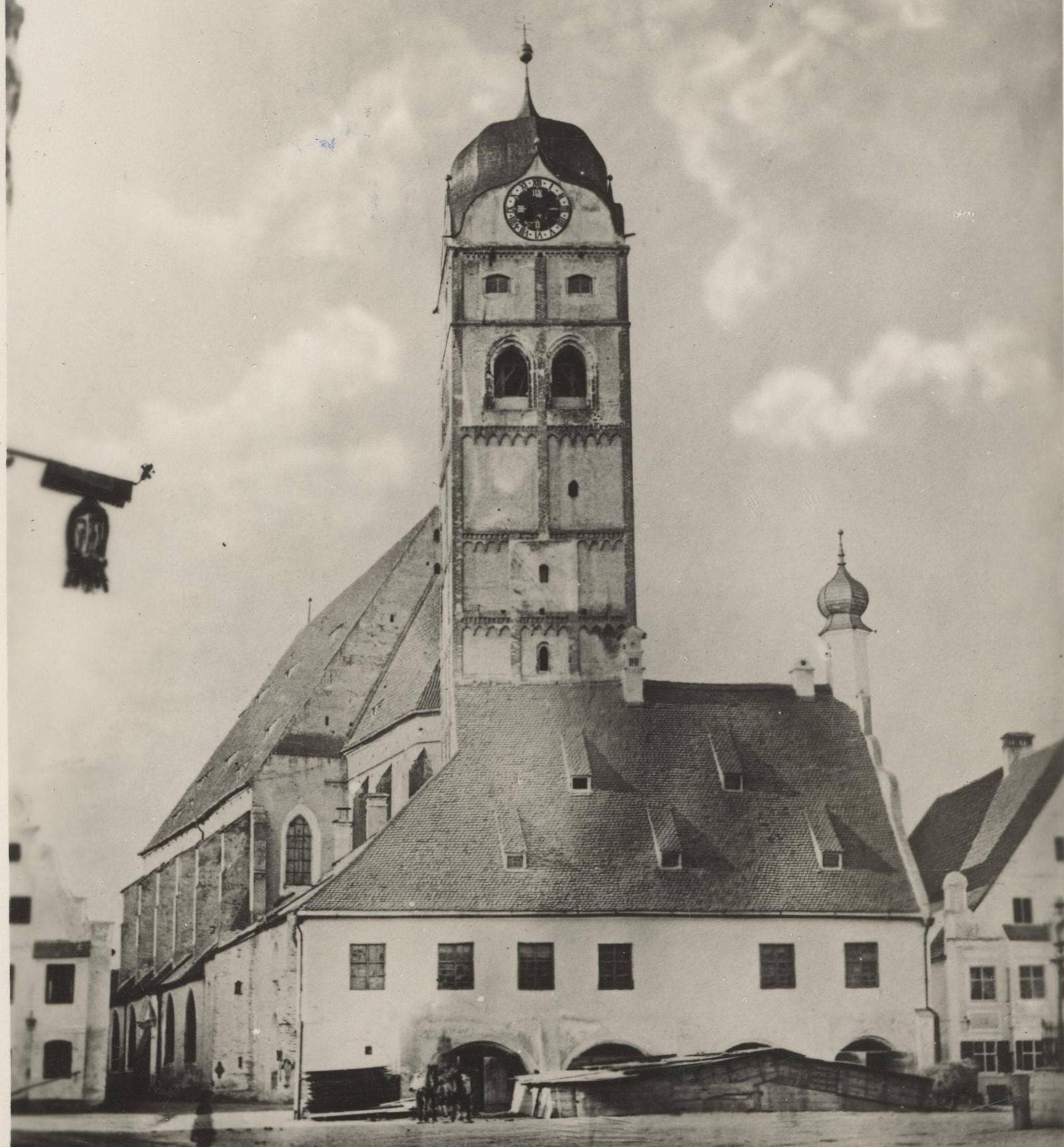
Always part of Erding’s story.
Market, town hall, grain exchange, savings bank, museum, school, Red Cross. And from 2026, once again a place for the town to come together.
From grain market to all-day bar. With a town hall, museum, school and bank along the way.
Schrannenplatz 1 stands at the very centre of Erding’s old town. Grain was traded here, savings deposited and the town’s affairs managed. It was the birthplace of Museum Erding, a place to study agriculture and a home for the Red Cross. Now, it is a place to eat, drink and talk again.
Take a seat at LUMA and you are beside a piece of history stretching back around 650 years. The town tower, enclosed on three sides by the Schrannenhalle, dates from around 1370.
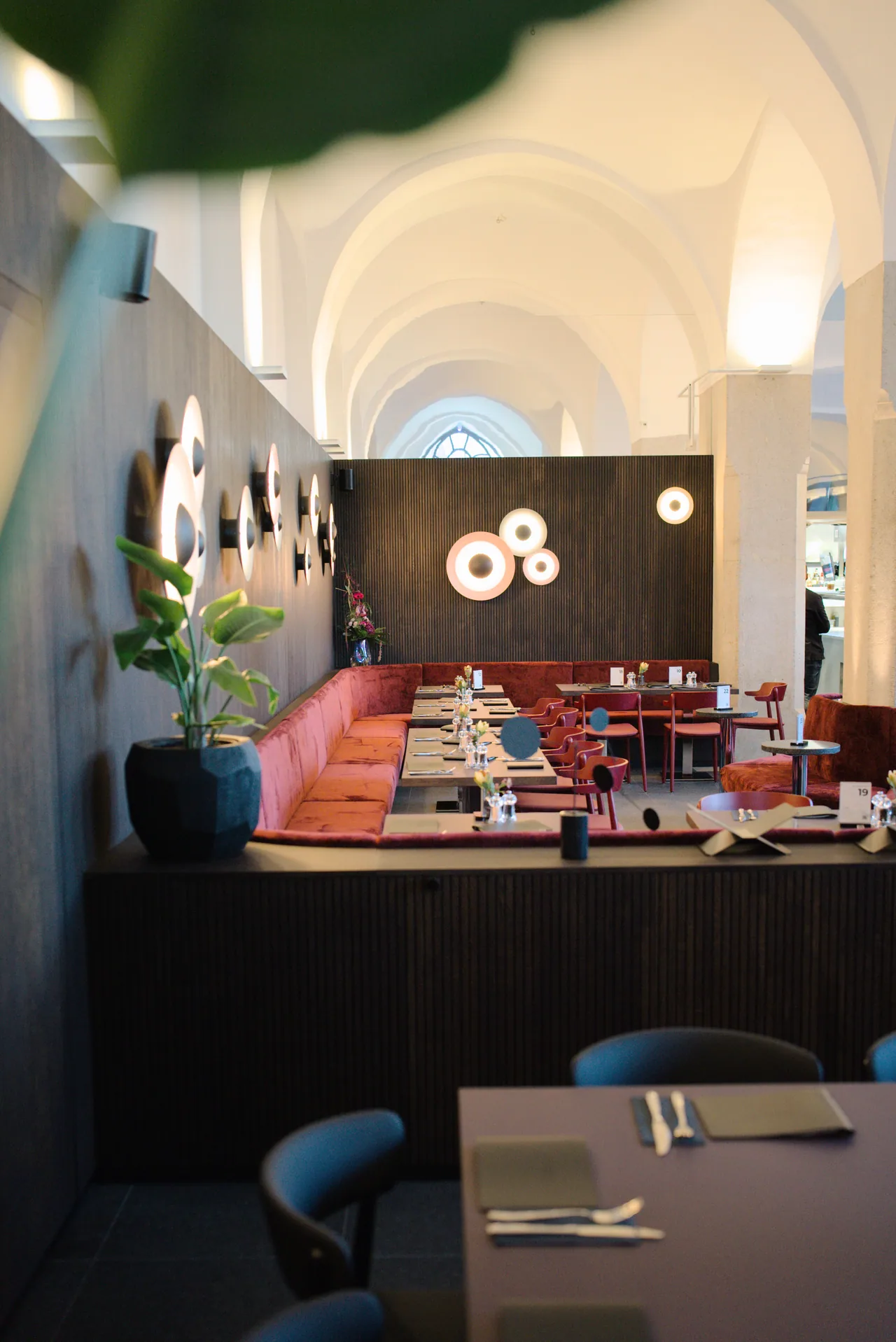
A timeline of the building
- c. 1370The present-day town tower is built.
- 1562Erding’s old town hall stands on this site, with a grain market below and town administration above.
- 1632 · 1648Destruction during the Thirty Years’ War, followed by rebuilding.
- 1826Sparkasse Erding opens its first branch here.
- 1856The story of Museum Erding begins in the “Zeughauszimmer”, the armoury room.
- 1865/66The old town hall is demolished. The present-day Schrannenhalle is built around the tower.
- 1873–1902A museum on the second floor; a grain market on the ground floor.
- 1911Erding’s grain market closes. The open arcades are enclosed.
- LaterAn agricultural winter school, later the Red Cross.
- 1953Sparkasse buys the building and makes it its head office.
- 2011–2013A heritage-sensitive renovation restores the façade’s original oxide red.
- 2024/25Counter services move out, leaving the large banking hall vacant.
- 26.09.2026LUMA and the new Tourist Information centre open together, in the building’s 160th year.
Town hall above. Grain market below.
By 1562, Erding’s old town hall stands here. Its ground floor is already a Schranne: a place to store and trade grain. Every Thursday, the square outside hosts a grain market. Erding becomes a grain-trading centre after Munich. Records for 1821 show around 70,000 Erdinger Scheffel, a local measure equivalent to roughly 11,000 tonnes in a single year.
Upstairs, the citizens’ assembly meets, plays are performed and gatherings take place. The pattern that runs through the building’s history is already established: trade below, public life above. In 1632 and 1648, the town hall burns down during the Thirty Years’ War and is rebuilt.
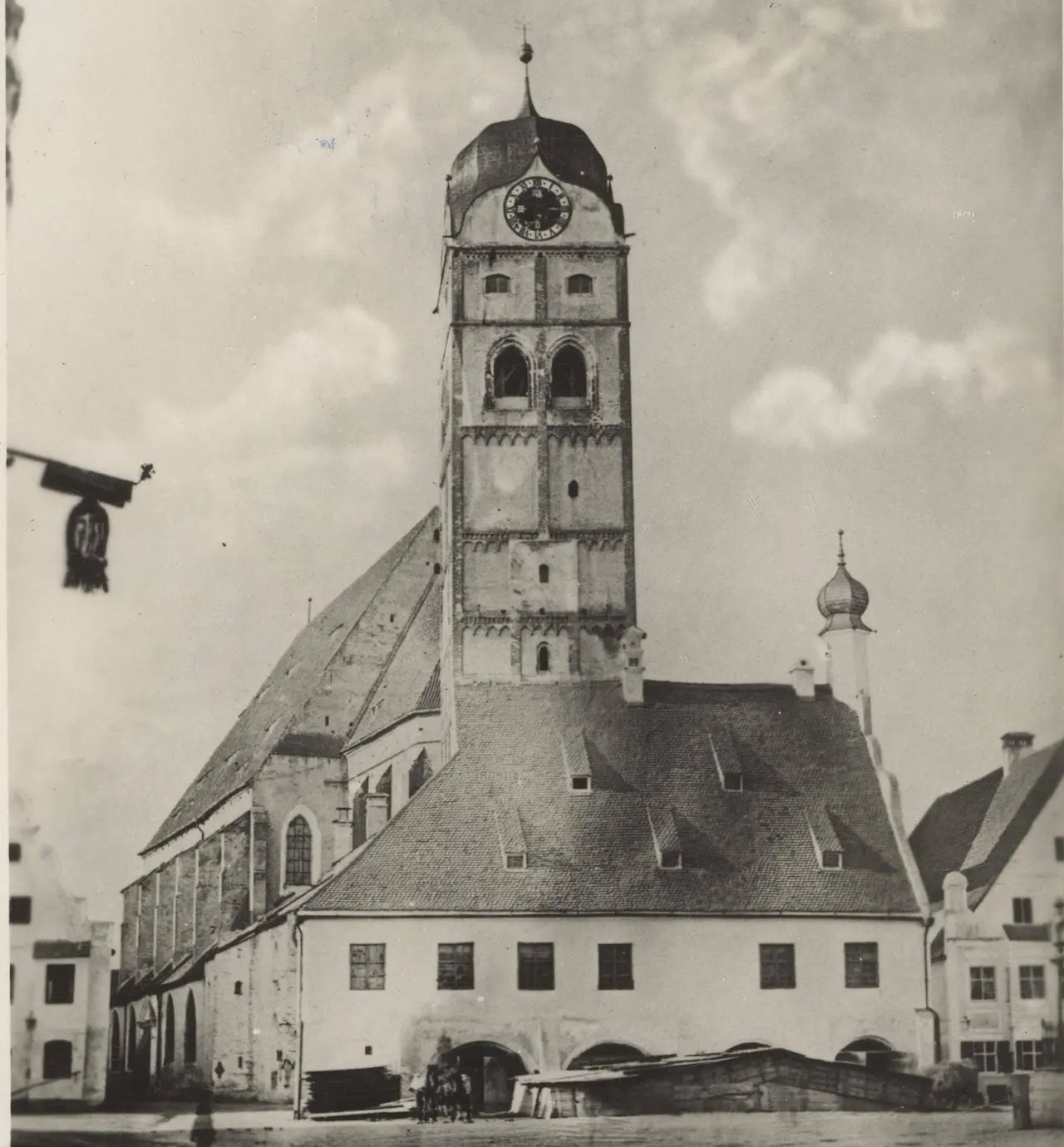
Where Sparkasse began, too.
On 2 January 1826, Sparkasse Erding opens in the old town hall on Schrannenplatz. Deposits total 1,800 guilders on its first day. The bank later moves out, then returns in 1953, buying the building that replaced its original home. Back on the same site, 127 years later.
In 1856, master shoemaker Anton Bachmair establishes the “Zeughauszimmer” in the same building, opening a collection of historical objects to the public. Museum Erding now regards this as its founding moment.
The Schrannenhalle. Built around the tower.
By the mid-19th century, the old town hall is in poor condition, and the grain market needs shelter from the weather. The town demolishes the building and constructs today’s Schrannenhalle in 1865–66: three storeys, a hipped roof and a tall, Gothic Revival arcaded ground floor. The medieval town tower remains. The new hall is built around it.
Where LUMA is moving in, there were originally neither bank counters nor café tables. There were sacks of grain. Just six years later, the railway reaches Erding. That very advance gradually makes the Schranne less important. The grain market closes in 1911 and the arcades are enclosed. An agricultural winter school and the Red Cross follow.
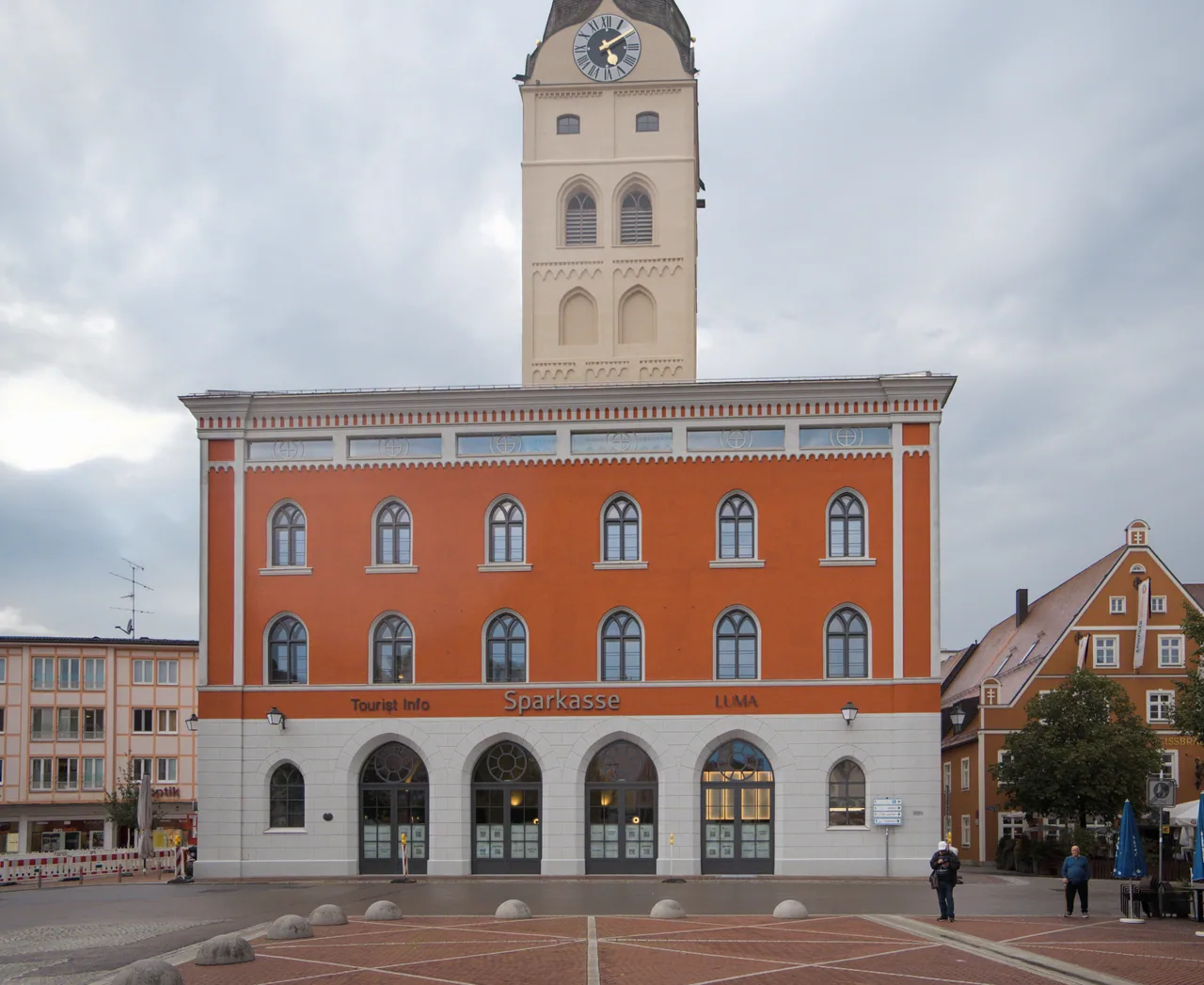
The grain hall becomes a bank.
Sparkasse grows rapidly after the currency reform. In 1953, it buys the Schrannenhalle and establishes its head office there. Alterations follow in 1976 and the late 1980s. The head office moves to Alois-Schießl-Platz in 1984, while the Schrannenhalle remains a branch.
Between 2011 and 2013, the building is almost entirely renovated: effectively a new interior within the historic shell. Original fabric is uncovered and former room proportions restored. Colour returns, too. After older paint layers are examined, the façade regains its oxide red of 1866. The decision was controversial at the time. Today, that red is part of the building’s identity.
The space that becomes LUMA.
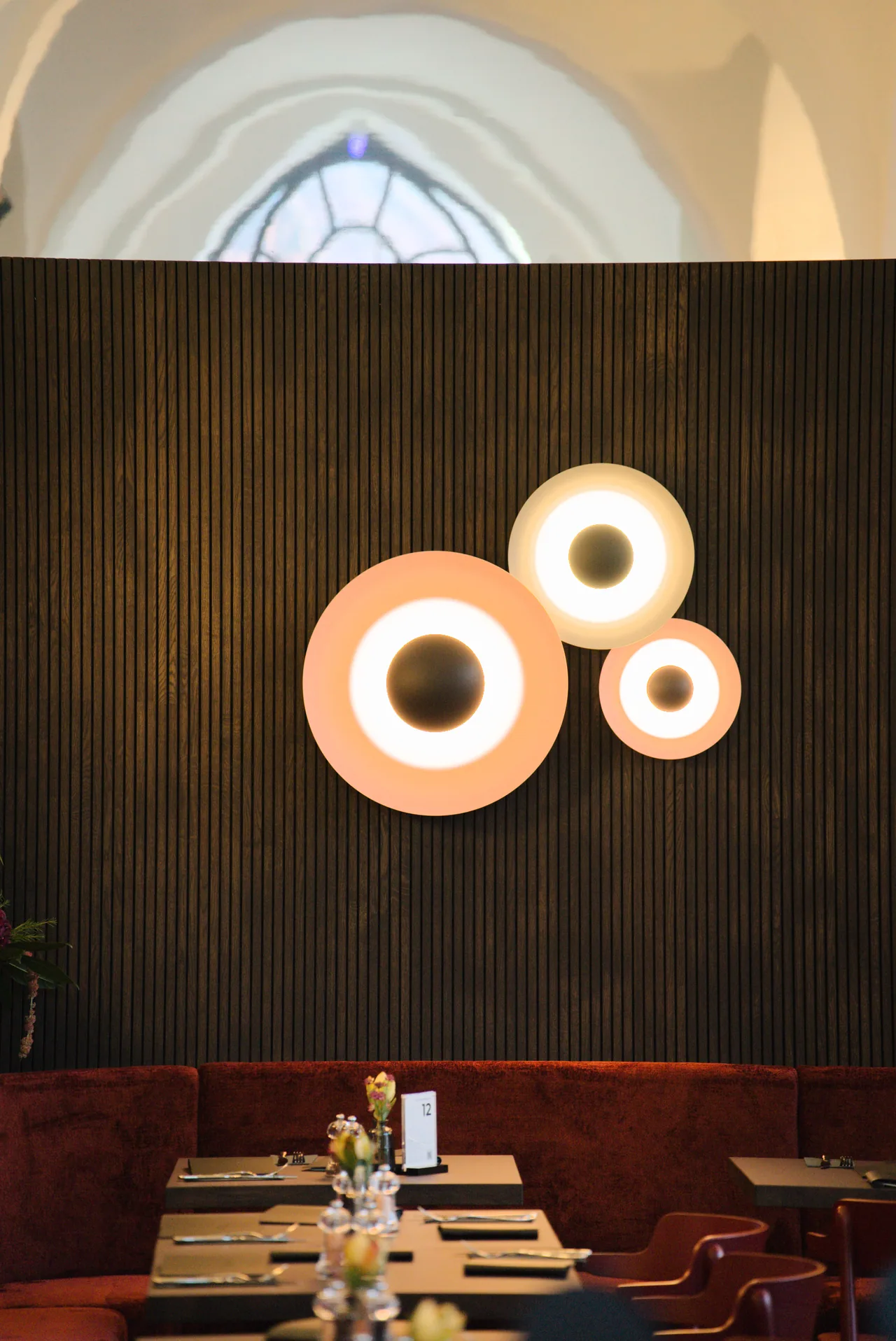
The former banking hall on the ground floor has vaulted ceilings and substantial sandstone columns. The renovation deliberately brought out its character as a grand historic space. At its heart, it reveals the market hall for which the building was created in 1866. At the end of 2024, Sparkasse ends its counter services here. The hall becomes vacant; the bank remains the owner.
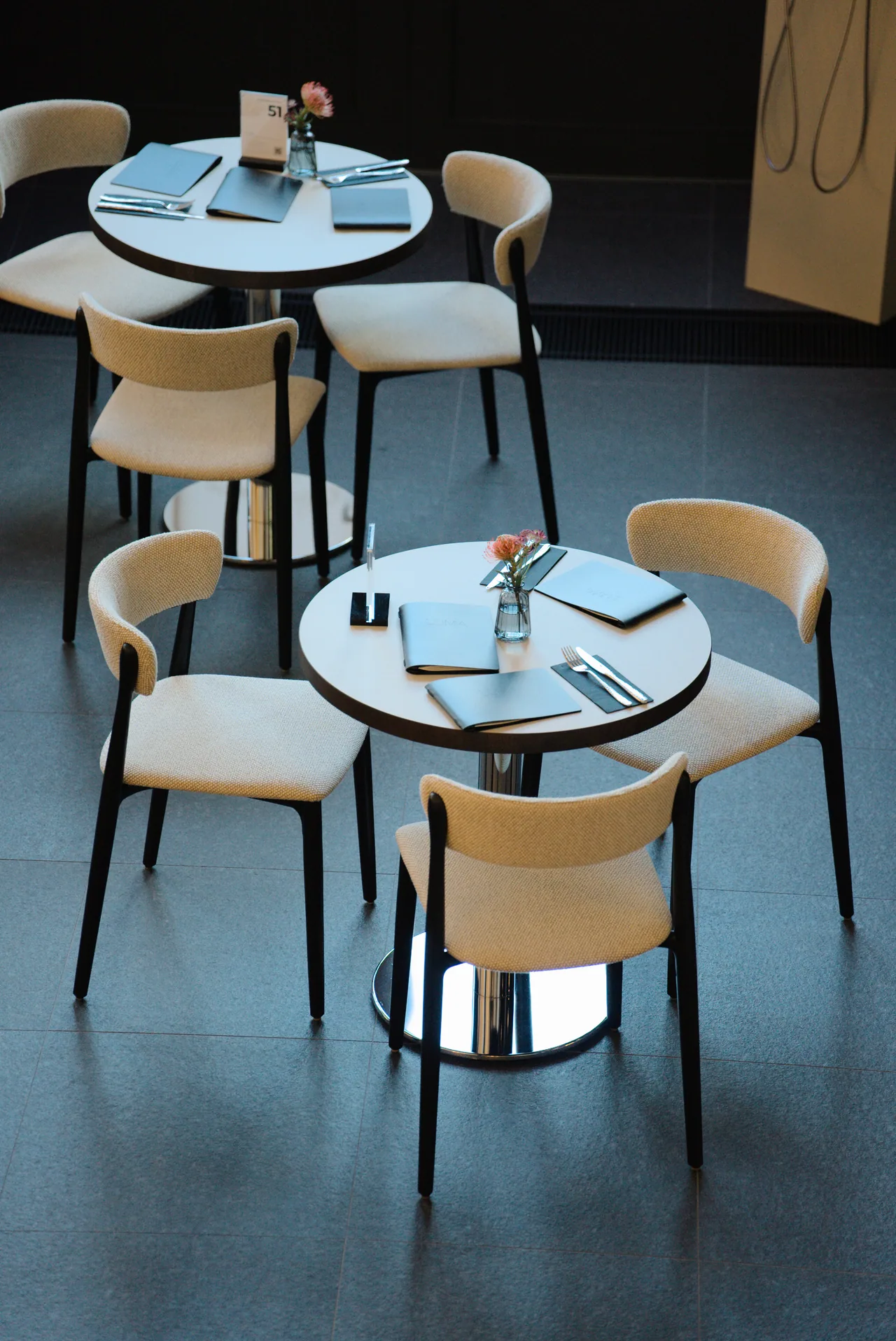
In October 2025, the concept is announced: Tourist Information and hospitality sharing one open space. Espresso and breakfast in the morning, lighter dishes at lunchtime, coffee and cake in the afternoon, then dinner, wine and drinks. Around 100 seats inside and about 70 on the terrace. The name comes from “lumen”, meaning light. At the same time, traffic on the square outside is reduced, with trees, seating and a water feature set into the paving.
Bringing Erding together for centuries.
LUMA is not an entirely new purpose for the Schrannenhalle. It is a return to its oldest idea: an open place at the heart of town, where people come together. Open since 26 September 2026, in the building’s 160th year.